
Released the High-Dimensional Screening Toolkit on GitHub
A public repository packaging reproducible implementations of several screening estimators for classroom and research use.

This week I published a public repository that packages several high-dimensional screening estimators into a single, well-documented Python module. The project has been living in various half-finished notebooks on my laptop for more than a year, and it feels good to finally give it a proper home.
The library is intentionally lightweight: it depends only on NumPy and SciPy so that students can install it inside a classroom lab without administrative friction. I made the deliberate choice not to reach for a heavier machine learning framework, because part of the pedagogical goal is to keep the code close to the mathematics that motivates each estimator.
The API is organized around a small number of composable pieces. There is a screening object for each method, a shared cross-validation utility, and a set of diagnostic plots that visualize marginal utilities, stability paths, and false discovery estimates. Users can mix and match these components without learning a bespoke abstraction, which was a common complaint I heard from students using older reference implementations.
The repo includes worked notebooks that reproduce the tables from our recent working paper, along with a suite of unit tests that check the estimators against known analytical results in low-dimensional cases where closed-form answers are available. Continuous integration runs the tests on every push, so I can update the library with reasonable confidence that I am not silently breaking a downstream analysis.
Documentation was the piece that took the longest. Writing a good docstring is genuinely harder than writing the function it describes, because a docstring has to anticipate the reader's mental model and meet them where they are. I ended up rewriting the tutorial three times, and I still expect it to change after the first wave of external users tries the library on their own data.
I hope the toolkit becomes a useful teaching resource as well as a reproducibility aid for our future publications. Several colleagues have already offered to contribute additional estimators, and I am putting together a lightweight contributor guide to keep the codebase consistent as it grows.
Contributions and issue reports are very welcome. If you use the toolkit in your own work, please let me know so I can compile a list of downstream applications. And if you find a bug, please open an issue rather than working around it — I would much rather fix the problem at the source than have it quietly propagate through other people's analyses.
Angela Owusu-Yeboah
Continue reading
More from the chronicles.

Paper Accepted for Peer Review at Journal of Multivariate Analysis
A new manuscript on adaptive sufficient dimension reduction for ultrahigh-dimensional regression has entered the peer review pipeline.
March 4, 2026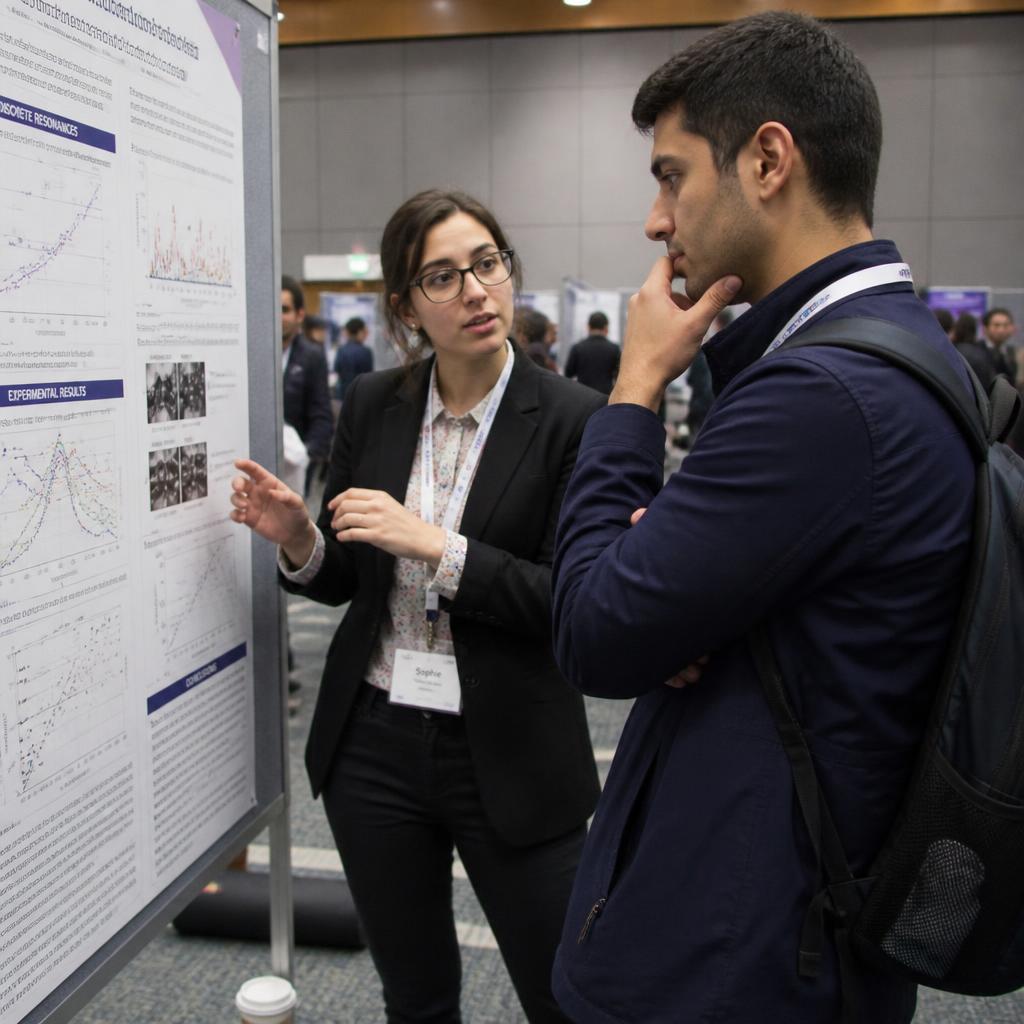
Attending the 2026 International Statistics Symposium
I will be presenting a poster on high-dimensional variable screening at the upcoming International Statistics Symposium in Kansas City.
February 12, 2026
Completed the Spring Applied Mathematics Course Curriculum
Reflections on redesigning the applied mathematics curriculum for undergraduates who do not consider themselves math people.
January 22, 2026