
Angela Owusu-Yeboah

Ph.D. Candidate · Statistics · Missouri S&T

Deciphering Complexity. Modeling the Future.

Ph.D. Candidate in Statistics at Missouri S&T. Specializing in sufficient dimension reduction, high-dimensional data analysis, and accessible statistical education.

6+

Peer-reviewed & working manuscripts

5

Conference presentations

3

Years of graduate teaching

Angela Owusu-Yeboah

Missouri S&T

Dept. of Mathematics & Statistics

The Scholar Profile

A doctoral journey rooted in curiosity and rigor.

I am a Ph.D. candidate in Statistics at Missouri University of Science and Technology, with a background spanning statistics, mathematics, and applied mathematics. My work sits at the intersection of statistical methodology and real-world data problems, with a particular focus on sufficient dimension reduction and high-dimensional analysis.

Teaching is inseparable from who I am as a scholar. I have served as a graduate teaching assistant and instructor, and I care deeply about making rigorous statistics feel practical, accessible, and meaningful, especially for students who do not yet see themselves as statistics people.

Outside the seminar room I enjoy soccer, traveling, and exploring new places. These interests keep me grounded, curious, and open to learning from different people, cultures, and experiences.

Sufficient Dimension Reduction

High-Dimensional Analysis

Statistical Education

Applied Mathematical Modeling

Scientific Production

Research, publications, and applied projects.

A curated repository of peer-reviewed work, conference presentations, and statistical projects that trace the evolution of my doctoral research.

Adaptive Sufficient Dimension Reduction for Ultrahigh-Dimensional Regression
Featured · Manuscript
2026

Adaptive Sufficient Dimension Reduction for Ultrahigh-Dimensional Regression

Owusu-Yeboah, A., Chen, L., & Park, S.

Journal of Multivariate Analysis (Under Review)

We propose an adaptive penalization framework that couples sliced inverse regression with a data-driven bandwidth selector, yielding consistent recovery of the central subspace even when the number of candidate predictors vastly exceeds the sample size. The estimator introduces a slice-adaptive weighting scheme that stabilizes the eigenstructure of the conditional covariance operator, and a refinement step that discards spurious directions before the final projection is constructed. On the theoretical side, we establish selection consistency under mild moment conditions and derive a rate of convergence that matches the sharpest results currently available in the sparse regression literature. Extensive simulations across synthetic and biomedical benchmarks — including gene-expression panels with more than forty thousand predictors — show meaningful gains in both selection accuracy and estimation stability relative to leading sliced inverse and sparse principal component baselines. A companion R package and reproducibility notebook accompany the manuscript so that practitioners can adopt the method on their own high-dimensional datasets without reimplementing the estimator from scratch.

A Model-Free Screening Procedure for Sparse High-Dimensional Regression
Journal Article2025

A Model-Free Screening Procedure for Sparse High-Dimensional Regression

Owusu-Yeboah, A., & Nakamura, T.

Statistica Sinica, Volume 35, Issue 2, pp. 812–841

This work introduces a two-stage screening routine that pairs distance correlation with a refinement step to prune noisy predictors while preserving weak but relevant signals in genomic data.

Teaching Reproducible Statistical Practice in Undergraduate Applied Mathematics
Pedagogy2024

Teaching Reproducible Statistical Practice in Undergraduate Applied Mathematics

Owusu-Yeboah, A.

Journal of Statistics and Data Science Education, 32(4)

A curriculum study describing how weekly modeling narratives, paired with reproducible Python labs, improve conceptual retention among engineering undergraduates.

On Kernel Choice and Bandwidth Selection in Sliced Inverse Regression
Working Paper2023

On Kernel Choice and Bandwidth Selection in Sliced Inverse Regression

Owusu-Yeboah, A., & Peterson, R.

Working Paper, Missouri S&T Statistical Research Series

A technical note comparing Gaussian, Epanechnikov, and triangular kernels for slice bandwidth selection under a variety of noise regimes.

Pedagogy & Mentorship

Making statistics feel practical, accessible, and meaningful.

Teaching is not an addendum to my research life, it is the discipline that keeps my ideas honest. I care most about students who do not yet see themselves as statistics people and who deserve a patient guide through modeling and inference.

"The best statistical education begins with a real question and trusts students to build the tools to answer it."

Teaching philosophy

Fall 2024 to Present

Graduate Instructor of Record

Applied Statistics for Engineering

Design and deliver lectures, labs, and assessments for a cohort of forty undergraduate engineers, emphasizing reproducible workflows and modeling intuition.

2022 to 2024

Graduate Teaching Assistant

Introduction to Probability and Statistics

Led weekly recitations, held extended office hours, and authored supplementary problem sets that scaffolded students into formal statistical reasoning.

2019 to 2021

Undergraduate Peer Tutor

Calculus I and II, Linear Algebra

Supported first- and second-year students through targeted one-on-one sessions focused on building confidence with proof and computation.

120+

Students mentored

4

Courses supported

4.9

Average student rating

Academic Chronicles

News, milestones, and notes from the lab.

A running record of publications, presentations, teaching updates, and professional milestones as my doctoral journey unfolds.

Paper Accepted for Peer Review at Journal of Multivariate AnalysisPublication
March 4, 20269 min read

Paper Accepted for Peer Review at Journal of Multivariate Analysis

A new manuscript on adaptive sufficient dimension reduction for ultrahigh-dimensional regression has entered the peer review pipeline.

Continue readingRead entry
Attending the 2026 International Statistics SymposiumConference
February 12, 20267 min read

Attending the 2026 International Statistics Symposium

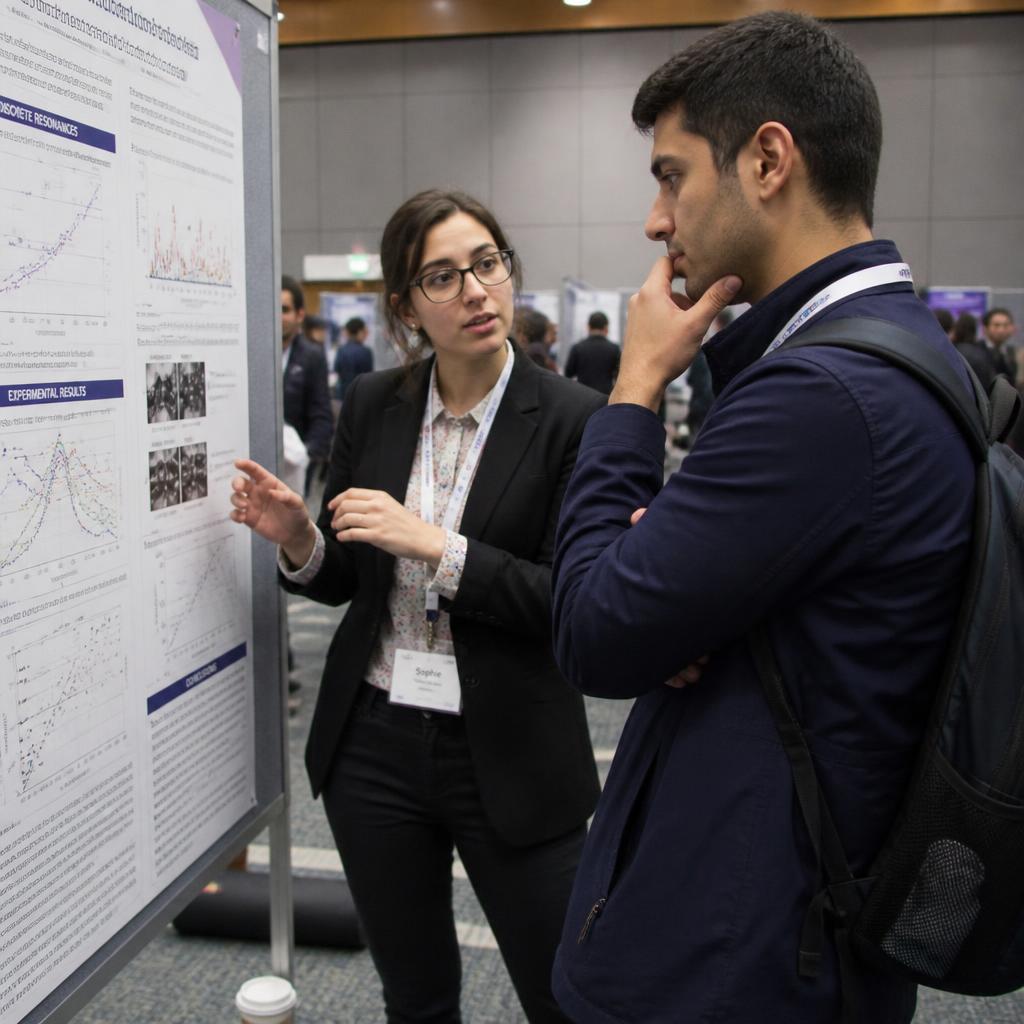
I will be presenting a poster on high-dimensional variable screening at the upcoming International Statistics Symposium in Kansas City.

Continue readingRead entry
Completed the Spring Applied Mathematics Course CurriculumTeaching
January 22, 20268 min read

Completed the Spring Applied Mathematics Course Curriculum

Reflections on redesigning the applied mathematics curriculum for undergraduates who do not consider themselves math people.

Continue readingRead entry
Nominated for the Missouri S&T Graduate Research FellowshipAward
December 3, 20256 min read

Nominated for the Missouri S&T Graduate Research Fellowship

Honored to receive a departmental nomination for the university-wide Graduate Research Fellowship in recognition of ongoing research productivity.

Continue readingRead entry
Invited Panelist for Women in Data Science Regional ChapterCommunity
November 10, 20257 min read

Invited Panelist for Women in Data Science Regional Chapter

Joined a panel on navigating early-career research in statistics and building a sustainable path into academic data science.

Continue readingRead entry
Released the High-Dimensional Screening Toolkit on GitHubProject
October 18, 20258 min read

Released the High-Dimensional Screening Toolkit on GitHub

A public repository packaging reproducible implementations of several screening estimators for classroom and research use.

Continue readingRead entry

Collaboration Desk

Let us build the next question together.

Researchers, students, and recruiters, you are warmly invited to reach out. Whether the aim is a joint manuscript, a guest lecture, or a candid conversation about early-career research, I would love to hear from you.

Production Intake

The correspondence desk.

Direct lines

Reach out with intention.

These channels reach me directly. For research inquiries, please include a brief description of the question and any relevant references.

Responses typically within two business days.

By submitting you agree to be contacted about your inquiry.